Best of · Women's

Best ski jackets (women's) for 2025-26.

Eight jackets, verified at the manufacturer and at a US retailer, with award badges across style, value, cold, versatile, and spring conditions.

Prices verified April 28, 2026 against manufacturer and US retailer pages. Expect quarterly drift; confirm at the retailer before buying. Looking for the men's version? Here is the men's page.

60-second answer tap for short version

If you only read one paragraph: buy the Patagonia Women's Powder Town Jacket at $349. It is the right call for a mid-level resort skier doing 10 to 20 days a year in the Northeast or Rockies. Lowest entry, the Montec Fawk W at $249 (20K/20K with a contemporary women's-specific cut). Want real GORE-TEX at the value tier, the REI Co-op First Chair GTX at $319. Cold-resort specialist, the Helly Hansen Powderqueen 3.0. Want one jacket that handles every season, the Helly Hansen Alphelia LifaLoft. The full picks below.

Top picks

Eight jackets. Each verified against the manufacturer's current product page on April 28, 2026 and confirmed available at a US retailer. What each award means is at the bottom of the page.

A note on method. The list is built the way every list on this site is built: manufacturer specs, third-party reviews from OutdoorGearLab, Switchback Travel, GearJunkie, and Better Trail, and a check that the women's-specific pattern is the brand's own women's block rather than a men's pattern with the chest taken in. Where a women's jacket is functionally identical to the men's version, the entry says so. Where it is not, the difference is flagged.

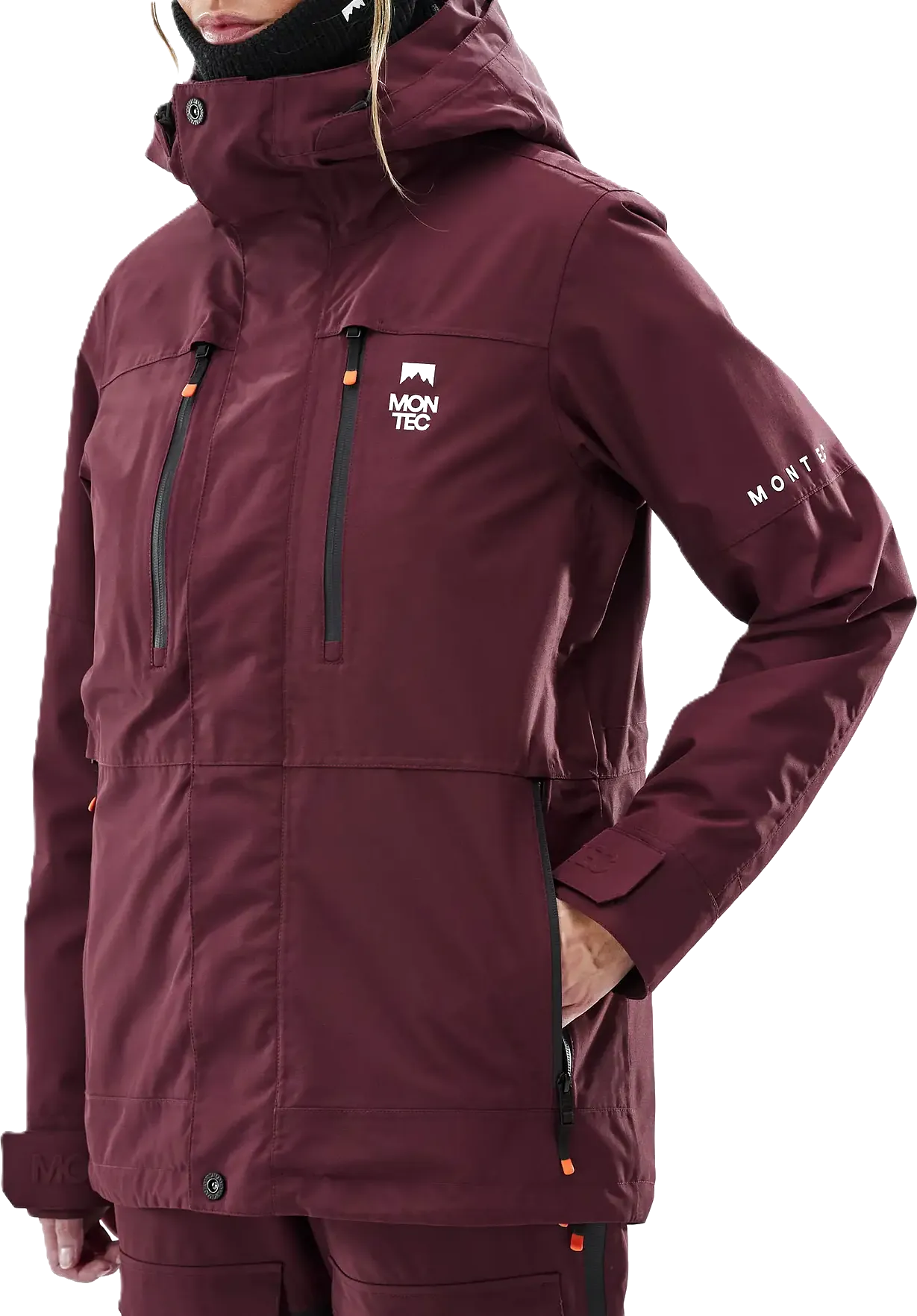
Montec Women's Fawk W Ski Jacket, in Atlantic
Best Style for the Price

Montec

Fawk W Jacket

$249 at Montec

Real-spec ski jacket with a contemporary cut at the lowest defensible price.

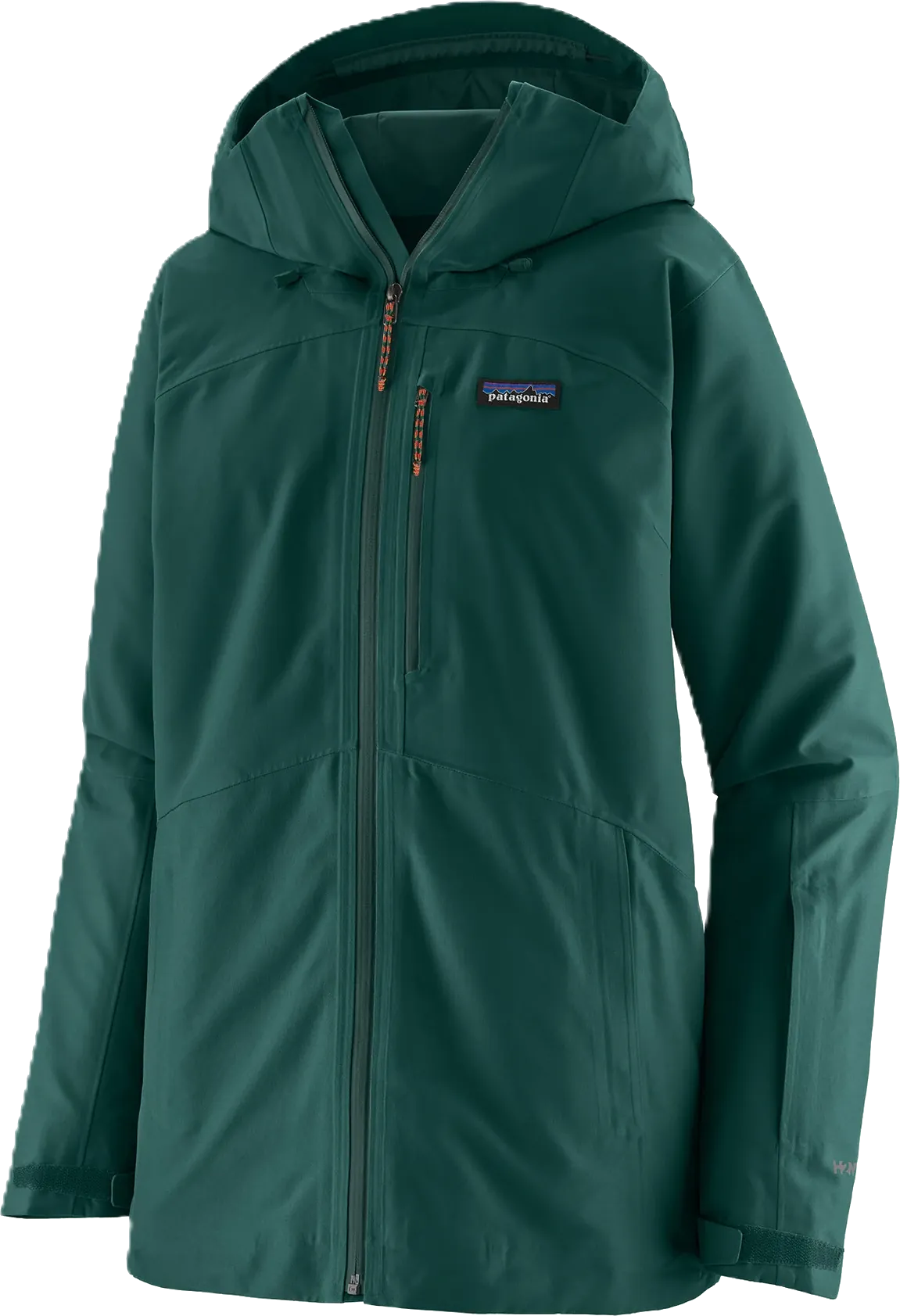
Patagonia Women's Powder Town Ski Jacket, in Conifer Green
Best Overall

Patagonia

Women's Powder Town Jacket

$349 at Patagonia

The default recommendation for a mid-level resort skier in the Northeast or Rockies.

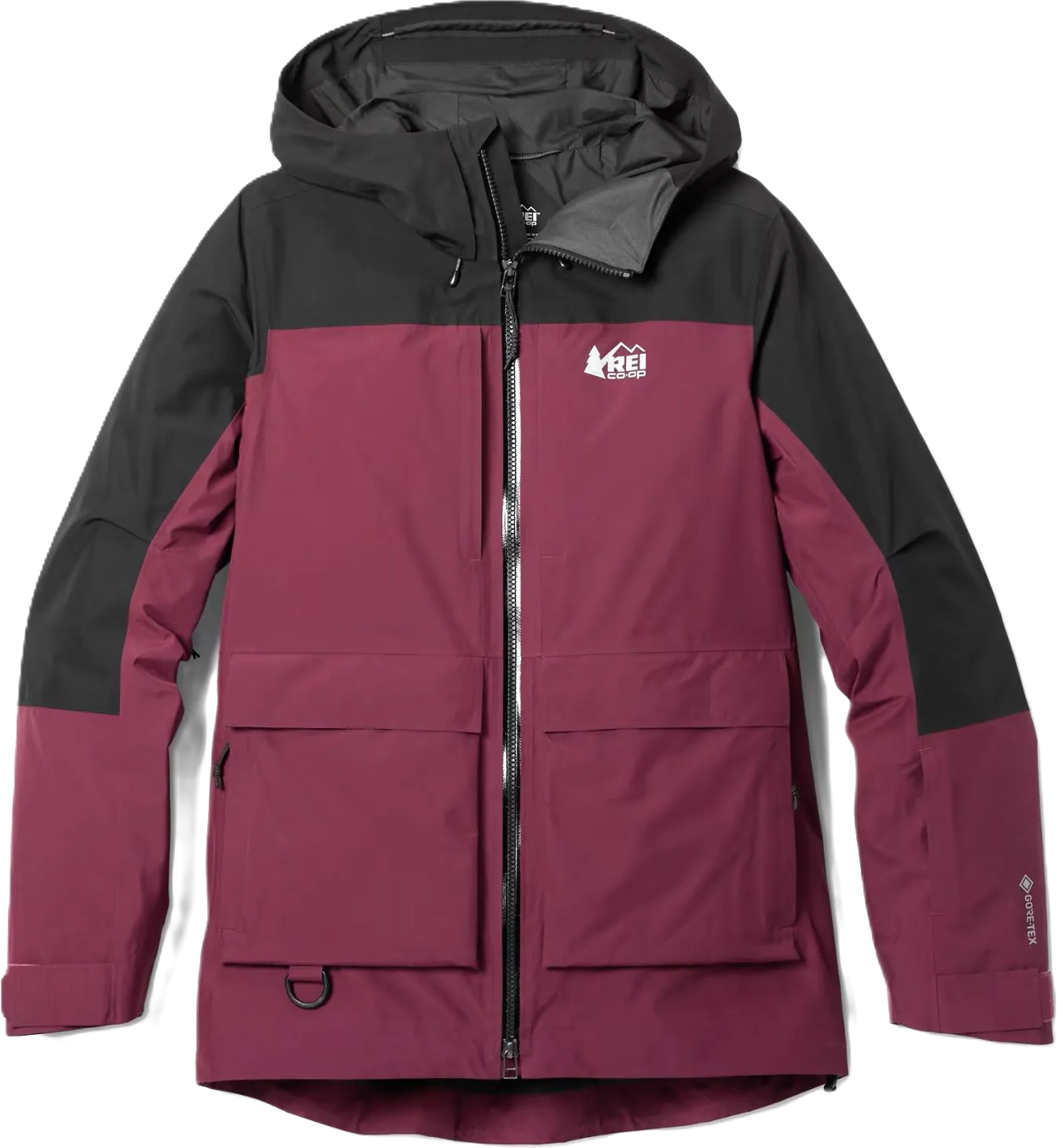
REI Co-op Women's First Chair GTX Ski Jacket, in Black
Best Value

REI Co-op

First Chair GTX Jacket

$319 at REI

Real GORE-TEX under $325. The price-to-spec ratio nothing else on this list touches.

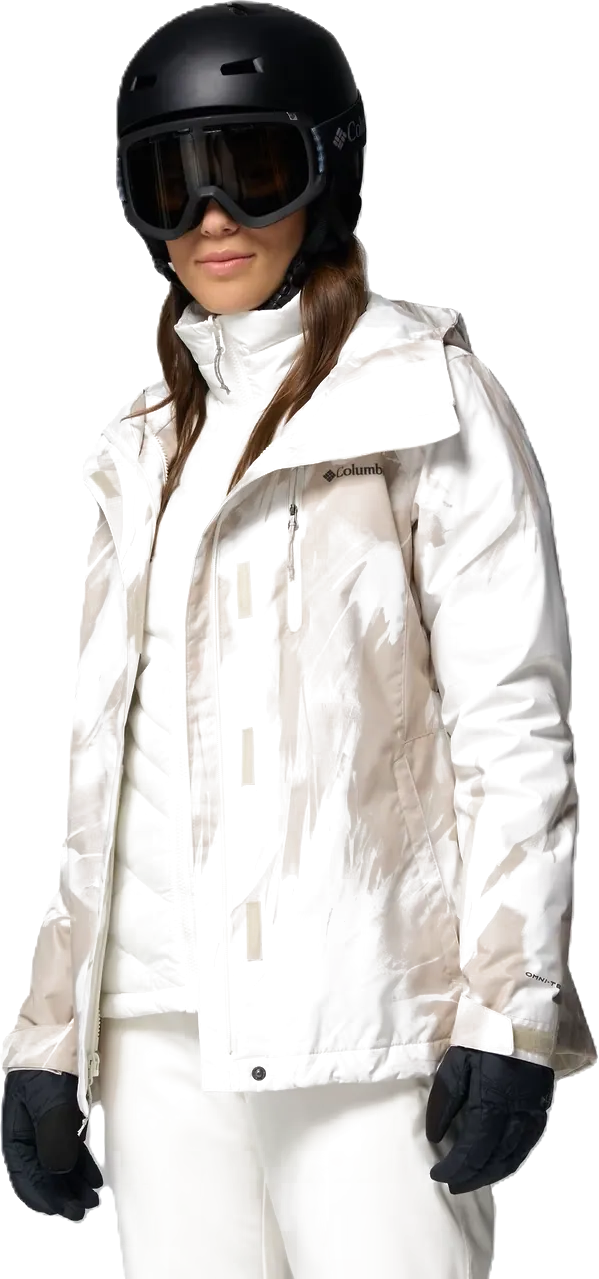
Columbia Women's Whirlibird V Interchange Ski Jacket, in Dark Stone Snowflight
Best for First-Timers

Columbia

Whirlibird V Interchange Jacket

$230 at Columbia

3-in-1 system. The shell, the liner, or both. Two jackets for the price of one entry-level shell.

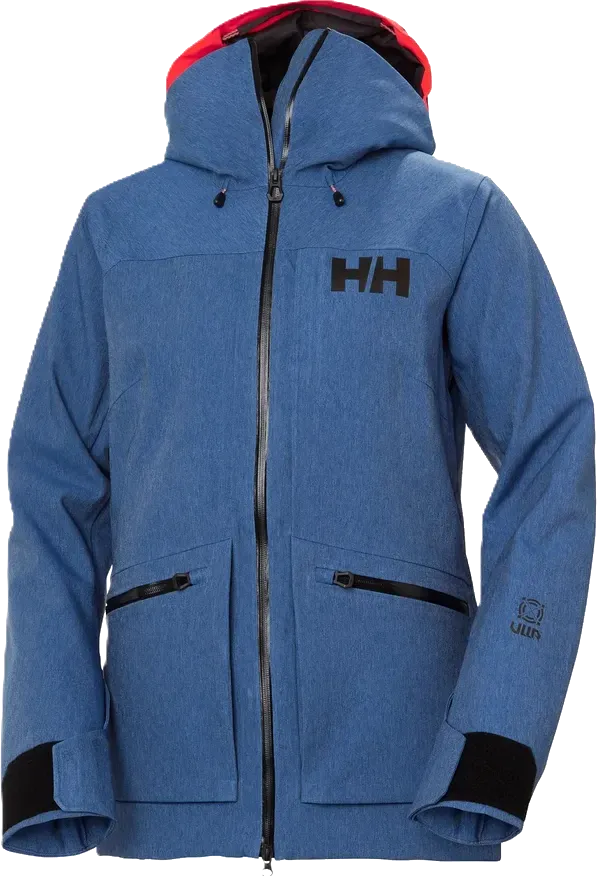
Helly Hansen Women's Powderqueen 3.0 Ski Jacket
Best for Cold Climates

Helly Hansen

Powderqueen 3.0 Jacket

around $550 as of April 2026

PrimaLoft Black Eco mapped to where you need it. The cold-day jacket for skiers who run cold.

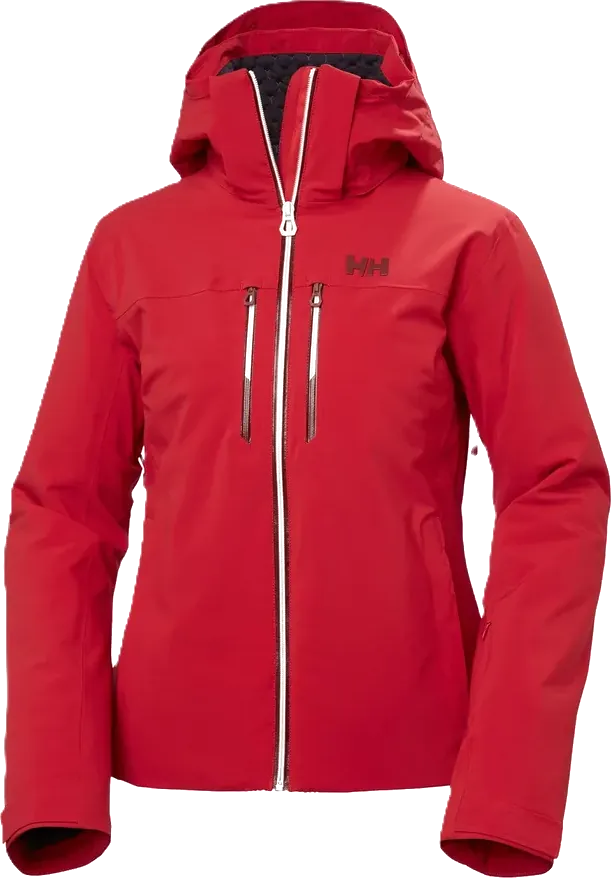
Helly Hansen Women's Alphelia LifaLoft Ski Jacket
Most Versatile

Helly Hansen

Alphelia LifaLoft Jacket

around $450 as of April 2026

HELLY TECH Professional 4-way stretch with light LifaLoft fill. Three-season range.

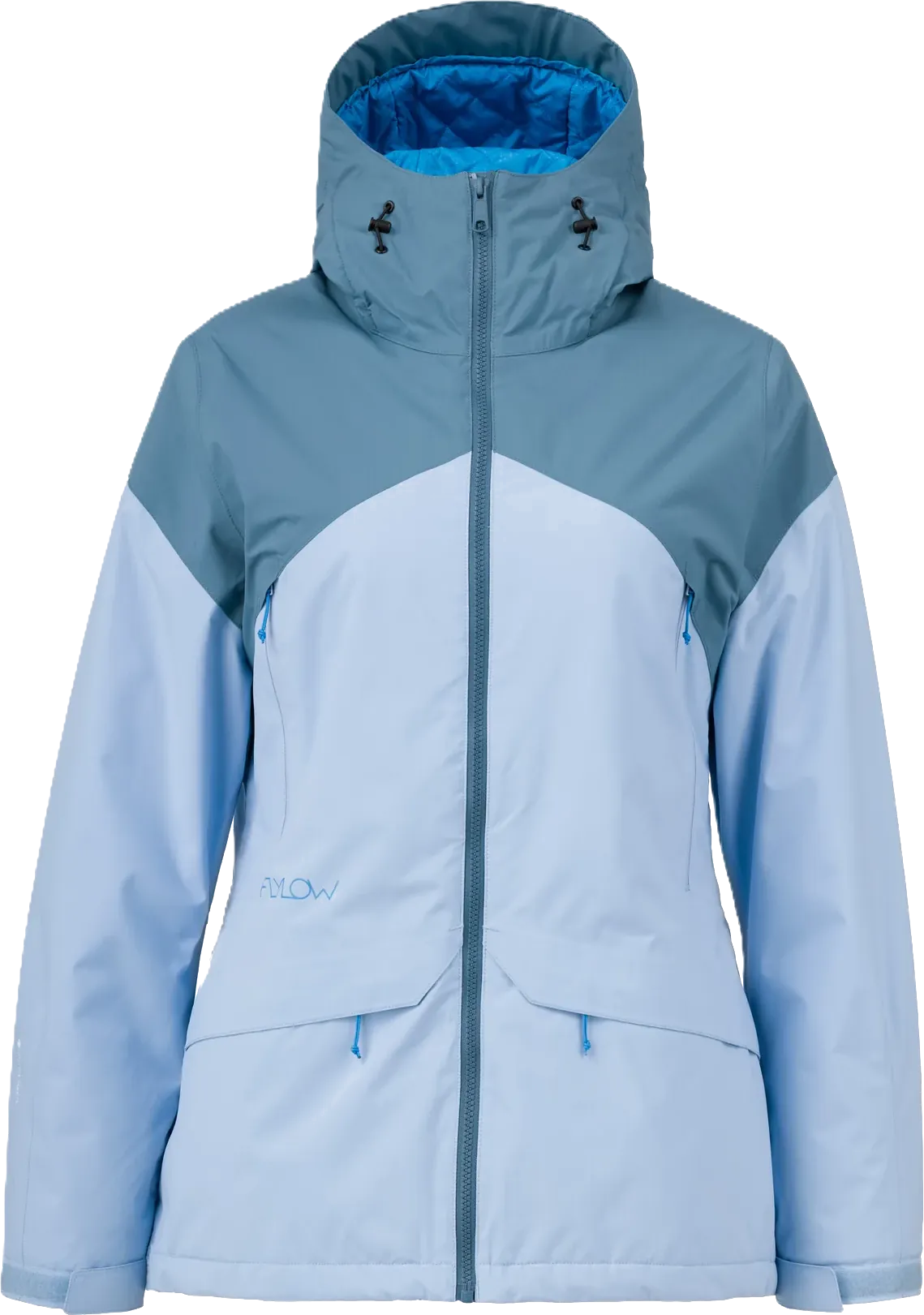
Flylow Women's Sarah Insulated Ski Jacket, in Ocean Frozen
Best for Spring

Flylow

Sarah Insulated Jacket

$300 at Flylow

Long pit zips, light insulation, freeride cut. The April-corn-snow specialist.

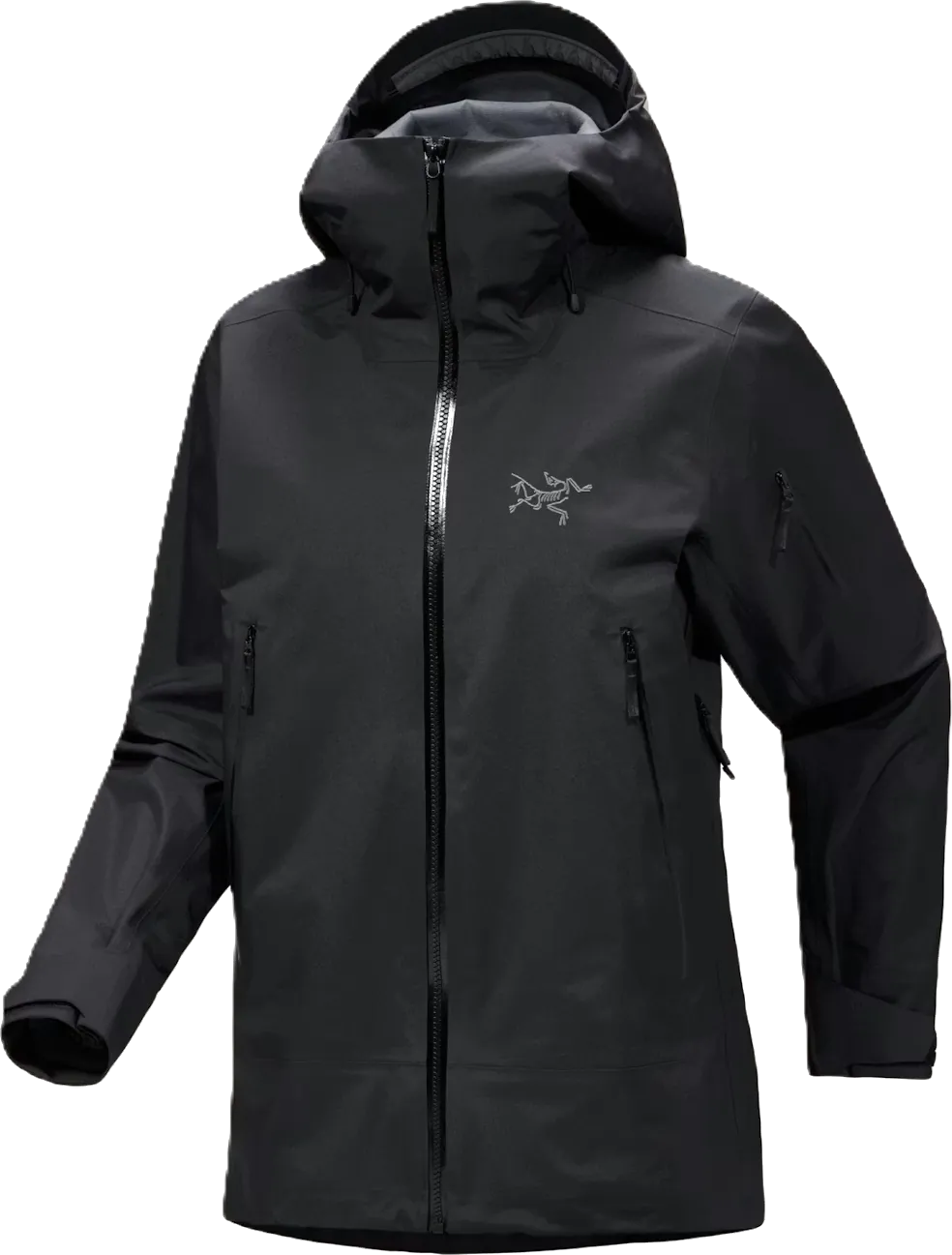
Arc'teryx Women's Sentinel Ski Jacket, in Black
Best Premium

Arc'teryx

Sentinel Jacket

$700 at Arc’teryx

The premium reference. PFAS-free 3L GORE-TEX ePE, women’s-specific cut. Buy once, wear ten seasons.

Detailed reviews

Montec

Fawk W Jacket

Shortlisted · $249 at Montec Best Style for the Price

Real-spec ski jacket with a contemporary cut at the lowest defensible price.

Buy at Montec

The Fawk W is Montec's classic insulated women's ski jacket and one of the spec-strongest picks on this page at any price. The construction is 20K/20K SHIELD-TEC bonded membrane with fully taped Sealon seams and a PFAS-free DWR. The face fabric is bluesign approved, made from recycled materials, and solution-dyed. The insulation is Comfortemp thermal fill at 60gsm through the body and 40gsm at the sleeves and hood. Features include a helmet-compatible Storm Guard hood, underarm vents, elasticated snow skirt, lift pass pocket, wrist gaiters, and a microfleece-lined chin guard.

The Fawk W is the lowest-priced jacket on this page, and the point of including it is to recognize the category most "best of" lists skip: women who care about how the jacket reads off the mountain as well as on it. Color palette goes well beyond black and navy. 4.9/5 rating across the brand site's reviews. At $249 it sits below every other jacket on this page while offering the highest waterproof rating of any pick except the Sentinel.

Pros: 20K/20K SHIELD-TEC with PFAS-free DWR, bluesign approved + recycled + solution-dyed face fabric, fully taped seams, Comfortemp insulation, helmet-compatible hood, women's-specific fit.

Cons: the women's cut is more relaxed than the Patagonia or Arc'teryx blocks; readers who want a slim cut should look at the Sentinel. No RECCO. The insulation locks the jacket to one temperature window the way any insulated piece does.

Who it's for: first-jacket buyers, women who care about how the jacket looks, anyone shopping under $300 who wants spec essentials done right at a women's-specific fit. Who should skip it: readers who want a shell to layer freely (this is insulated), and skiers who already own a mid-layer system and want a 3-layer hardshell (look at the Sentinel).

Patagonia

Women's Powder Town Jacket

Shortlisted · $349 at Patagonia Best Overall

The default recommendation for a mid-level resort skier in the Northeast or Rockies.

Buy at Patagonia

Patagonia patterns the women's Powder Town on a women's-specific block, not a scaled-down men's. The torso runs shorter, the shoulders are narrower, and the shape through the waist actually has shape. The 2-layer H2No shell is rated for the kind of weather Stowe and Sugarbush hand you (wet snow at noon, ice in the trees, real cold on the gondola), and the 2025-26 version uses a 150-denier face fabric that holds up to tree-line skiing better than the older 75-denier face.

Pit zips are the right size. The hood fits over a Smith Mission MIPS without pulling on the goggle strap. Powder skirt clips to Patagonia's matching pant if you go all in. The shell is uninsulated by design: a Nano Puff under it in January, a fleece under it in March.

Pros: sensible price, real waterproofing, no PFAS, helmet-friendly hood, true women's-specific cut.

Cons: 2-layer construction is not as durable as 3-layer over a 10-year horizon. No RECCO. Color range is on the conservative side compared to Flylow.

Who it's for: mid-level resort skiers in the Northeast, Rockies, or Sierra doing 10 to 25 days a year. Who should skip it: backcountry tourers (look at OR's touring lines), and people who want one box that includes insulation (look at the Whirlibird or the Powderqueen).

REI Co-op

First Chair GTX Jacket

Shortlisted · $319 at REI Best Value

Real GORE-TEX under $325. The price-to-spec ratio nothing else on this list touches.

Buy at REI

REI's house brand has gotten genuinely good in the last five years. The women's First Chair is a 2-layer GORE-TEX shell at a price that competing brands sell their proprietary membrane jackets for. That math is hard to argue with. The women's version uses a women's-specific pattern (shorter back length, narrower across the shoulder), not a unisex shape with a smaller label.

The fit runs a touch boxy through the waist by design, because REI's house line is built to layer over a fleece without binding. The pockets are fewer than the Sarah and the hood is less articulated than the Powder Town. None of that matters if your real question is "can I get a competent waterproof jacket without spending $400". Yes. This is it.

Pros: GORE-TEX at $319, helmet-compatible hood, powder skirt, REI return policy.

Cons: styling is conservative to the point of forgettable. 2-layer not 3. Sizing chart skews wider than slim through the waist.

Who it's for: first jacket buyers, people upgrading from a non-ski shell, anyone who wants GORE-TEX without the badge tax. Who should skip it: skiers who want a 10-year jacket (go 3-layer), and people who care about a slim cut.

Columbia

Whirlibird V Interchange Jacket

Shortlisted · $230 at Columbia Best for First-Timers

3-in-1 system. The shell, the liner, or both. Two jackets for the price of one entry-level shell.

Buy at Columbia

Three-in-one jackets are usually a compromise on both halves. The Whirlibird is the closest thing to an exception at this price. The shell is Omni-Tech (decent for dry-cold and most Northeast days), the liner is Omni-Heat with Thermarator synthetic fill, and the two zip together when you need it or split when you don't. Columbia patterns the women's version on a women's block, with shaping through the waist and a shorter sleeve.

This is not the jacket for a Mt. Baker trip. It is the right call for a first-trip Killington skier or a once-a-year visitor. The interchange system means you get a winter jacket for town when ski season ends. That math beats a single-purpose entry shell.

Pros: two jackets for the price of one entry shell. Genuinely warm with the liner zipped in. Forgiving fit for a learning skier.

Cons: Omni-Tech is not GORE-TEX, and you will notice in real rain. Liner is bulky if you are skiing hard. Shell looks plain when worn alone.

Who it's for: first-timers, infrequent skiers, gift purchases. Who should skip it: anyone skiing more than 15 days a year (you'll outgrow it in two seasons).

Helly Hansen

Powderqueen 3.0 Jacket

Shortlisted · around $550 as of April 2026 Best for Cold Climates

PrimaLoft Black Eco mapped to where you need it. The cold-day jacket for skiers who run cold.

Buy at Helly Hansen

The Powderqueen is what HH builds when the brief is "warm, women's-specific, full-resort". It is the women's analog of the Alpha 4.0: HELLY TECH Professional 2-ply fabric at the high end of resort waterproofing, body-mapped PrimaLoft Black Eco insulation, H2Flow venting on the chest that moves air without unzipping, RECCO included. The cut is a women's freeride cut with shape through the waist and a slightly longer back panel for lift sitting.

The hood and powder skirt are right. It is heavier than the Alphelia. That is the whole point of this pick: when the cold is the problem and you want it solved out of the box, the Powderqueen solves it.

Pros: warmth that holds up at sub-15°F, real waterproofing, hood that fits over a helmet without compromise, RECCO included, women's-specific freeride cut.

Cons: too warm for spring or for hard-charging skiers in February. Price is up there. Insulated jackets always commit you to one temperature window.

Who it's for: people who run cold, Northeast skiers who lift-ride a lot, anyone whose ski day starts at 8am at Stowe in January. Who should skip it: spring skiers, hot-runners, backcountry tourers.

Helly Hansen

Alphelia LifaLoft Jacket

Shortlisted · around $450 as of April 2026 Most Versatile

HELLY TECH Professional 4-way stretch with light LifaLoft fill. Three-season range.

Buy at Helly Hansen

The Alphelia is the women's-specific resort jacket for the reader who wants "one jacket that does everything". HELLY TECH Professional 4-way stretch at 15K/15K, light LifaLoft synthetic fill (warm-for-weight, dries fast), helmet-compatible hood, powder skirt, mesh-lined pit zips. The cut is the same women's freeride pattern as the Powderqueen but with a slimmer profile and less insulation, which is what makes it work November through April.

The reason this earns versatile rather than the Powder Town is the light insulation. No need to add a mid-layer for a 25°F day; you can still drop it for 40°F spring days because the insulation is genuinely light. That gives it a wider temperature window than either a pure shell or a heavily insulated jacket.

Pros: works across the season without mid-layer math, women's-specific cut, real waterproofing, light enough for spring, warm enough for January.

Cons: the integrated insulation means you cannot unzip down to a shell on hot days. 15K is enough for resort but not at the very top of the category.

Who it's for: resort skiers who want one jacket and do not want to think about midlayers. Who should skip it: first-timers (the Whirlibird is simpler), and anyone who already owns a good mid-layer system (the Powder Town as a shell will be more flexible).

Flylow

Sarah Insulated Jacket

Shortlisted · $300 at Flylow Best for Spring

Long pit zips, light insulation, freeride cut. The April-corn-snow specialist.

Buy at Flylow

Flylow is a Colorado brand that makes shells for skiers who actually ski. The Sarah is their women's-specific resort jacket: 3-layer Intuitive recycled-polyester fabric, full seam taping, long pit zips, light synthetic insulation, removable powder skirt, freeride cut patterned on a women's block. It is the jacket for skiing hard without thinking about which one to grab.

It earns the spring pick because the pit zips are long enough to actually move air, the insulation is light enough that 40°F afternoons do not cook the wearer, and the fit is built to vent rather than trap heat. It also handles January if there is a real mid-layer underneath. Flylow shows up in independent shop reviews and on Northeast patrol staff lists for a reason.

Pros: serious pit zips, freeride fit that vents, recycled-polyester face fabric, women's-specific cut from a brand that takes the women's line seriously.

Cons: Flylow's color palette can be loud. Freeride fit is not slim. Not the warmest insulated jacket on the page.

Who it's for: spring skiers, hard-chargers, anyone who runs hot on a bell-to-bell day. Who should skip it: skiers who want a slim cut, and people who only ski deep-cold days.

Arc'teryx

Sentinel Jacket

Shortlisted · $700 at Arc’teryx Best Premium

The premium reference. PFAS-free 3L GORE-TEX ePE, women’s-specific cut. Buy once, wear ten seasons.

Buy at Arc'teryx

The Sentinel is Arc'teryx's women's-specific resort jacket and the reference jacket against which the rest of this list is measured. 3-layer GORE-TEX ePE (the new PFAS-free membrane), C-KNIT backer, StormHood that adjusts to actually fit a helmet, RECCO, and the pocket layout you would design if you spent a year skiing and another year listening to ski patrollers complain about pocket layouts. The cut is built on Arc'teryx's women's block, which runs slim through the waist with a longer back panel.

The Sentinel does not carry one of the value-band awards because those go to picks that make sense at typical buyer price points. The Sentinel is the splurge. If $700 is a sensible budget and the use case justifies it, this is the buy. The 3-layer construction will outlast every other jacket on this page. If $700 isn't on the table, the Powder Town gets you 80% of the way there for half the price.

Pros: 3L GORE-TEX ePE, PFAS-free, hood and pocket execution that nobody else matches, will last a decade, women's-specific cut.

Cons: $700. The cut is athletic; layering a heavy puffy under it is tight. Branding is conspicuous.

Who it's for: skiers doing 30+ days a year who think in price-per-day. Who should skip it: almost everyone else.
How we tested and why trust us

Every pick on this page is Shortlisted. That means the editorial team built the list from manufacturer specs and from third-party reviews at OutdoorGearLab, Switchback Travel, GearJunkie, and Better Trail. None of these women's-cut jackets has been personally tested by us; the honest framing is that this list is built the same way every list on this site is built, and the Tested tag does not appear on any pick here.

The honesty framework matters because the alternative is to claim seven women's jackets a year have been personally tested, which they have not, and which no individual reviewer can do without a paid testing program. The three tiers below say which is which.

  • Tested

    Personally owned and skied at least one full season. Visible Tested tag.

  • Shortlisted

    Verified on manufacturer specs and third-party reviews. Most products on this site sit here.

  • Curated

    Award-winning selections from the shortlist against the criteria defined above.

This site has no commercial relationships at this time. Outbound retailer links are provided for reference only. The shortlist is built on specs, third-party reviews, and personal experience, not on commission. See the full methodology for the long version.

How to choose a women's ski jacket

The category gets needlessly confusing. Strip it down to five questions and the answer falls out.

1. Insulated or shell?

Insulated jackets have synthetic or down fill built in. Simpler, warmer out of the box, locked to one temperature window. Good for first-timers, infrequent skiers, and people who only ski mid-winter. Shells have no insulation; you control warmth with a mid-layer underneath. More flexible across the season, more parts to manage, better long-run value if you ski a lot.

2. What waterproof rating?

Manufacturers print waterproofing in mm, measured by the Schmerber test (the height of a column of water the fabric will hold before leaking). 5K leaks in real snow. 10K is the sane minimum for resort skiing. 15K to 20K covers Northeast wet snow and PNW rain. Above 20K is diminishing returns for resort use.

3. Two-layer or three-layer construction?

2-layer is a face fabric bonded to a membrane with a separate liner hanging inside. Cheaper, lighter, less durable. 3-layer bonds the face fabric, the membrane, and the backer into one piece. More expensive, more durable, lasts twice as long under hard use. If you ski 5+ days a year and plan to ski for years, 3-layer pays back.

4. Women's-specific cut, or unisex?

Brands that pattern on a women's block (Patagonia, Arc'teryx, Helly Hansen, Flylow, REI Co-op, Columbia) cut the torso shorter, the shoulders narrower, and shape through the waist and hip. That matters more than the marketing word "women's" on the label. A men's small with the chest taken in is not the same garment as a jacket built on a women's block. Every pick on this page is the latter.

5. Fit and length

Resort jackets cut at hip length are the standard. Longer cuts (the Powder Town and Sentinel both run a touch longer in the back) keep snow out when you sit on the lift. Slim cuts look better at lunch but limit mid-layer choices. Try on with the mid-layer you actually plan to wear, not over a t-shirt.

What to look for, in order

If you are shopping at a store and want a checklist, here is the order of priority. Top to bottom.

  1. Waterproof rating of at least 10,000mm, preferably 15-20K. Below 10K is not a ski jacket.
  2. Insulation fit for your conditions. Synthetic for resort (works wet), down for dry-cold only. Fill weight matters more than the marketing word.
  3. Women's-specific cut from the brand's women's block, not a scaled-down men's pattern. Try on with a mid-layer you'll actually wear.
  4. Helmet-compatible hood. Try it with a helmet. The hood must fit over the lid without pulling the goggle strap.
  5. Powder skirt. Snap-on or fixed, both work. No skirt = snow up your back when you fall.
  6. Pit zips. Long enough to actually dump heat. Six-inch token zips don't move air.
  7. Pocket configuration. Two hand pockets, one chest, one ski-pass pocket on the sleeve. Anything else is bonus.
  8. RECCO reflector if you ski near avalanche terrain. Not a substitute for a beacon in the backcountry.
  9. Cuff design. Wrist gaiters with a thumb hole, or velcro tabs over the gauntlet of a glove. Bare cuffs leak.

FAQ

How waterproof should a ski jacket be?

Look for at least a 10,000mm (10K) waterproof rating for dry-cold days at Rocky Mountain resorts. Move to 15K or 20K if you ski the Northeast, the PNW, or anywhere with wet snow and rain at the base. The Sentinel and the Sarah both come in at the higher end of that range, which is the safe ceiling for resort skiing.

Is a 3-in-1 jacket worth it?

For a first-timer or a once-a-year skier, yes. The Whirlibird V gives you a waterproof shell and a synthetic-insulated liner that zip together or work separately. You get a ski jacket, a town jacket, and a cold-day combo for the price of one. For someone skiing 10+ days a year, a separate shell plus a separate mid-layer (fleece or Nano Puff) is more flexible.

Insulated jacket or shell?

Insulated is simpler and warmer for cold dry days at resort. Shell is more flexible across a range of conditions because you control warmth with your mid-layer. If you only ski 3 to 5 days a year and always in winter, insulated. If you ski into spring or run hot on groomers, shell.

What's a good ski jacket for women beginners?

The Columbia Whirlibird V Interchange or the REI Co-op First Chair GTX. Both sit under $325, both have a powder skirt and helmet-compatible hood, both will keep a beginner dry through a learning week. The Whirlibird is more forgiving on a lift-line lunch break because the insulation is built in.

Do women’s ski jackets fit differently?

Yes. Women’s-specific cuts run a shorter torso, narrower shoulders, and shape through the waist and hip. Brands like Patagonia, Helly Hansen, Flylow, and Arc’teryx pattern their women’s lines on women’s blocks rather than scaling a men’s pattern down. A men’s small will not fit the same way as a women’s small even at the same nominal chest measurement.

Do I need a powder skirt?

Yes, even if you never ski powder. The skirt seals the bottom of the jacket so when you fall (and you will), snow does not pack into your base layer. Every jacket on this page has one. Skip any jacket that does not.

How long should a ski jacket last?

A 3-layer GORE-TEX or HELLY TECH Professional shell, treated annually with a DWR refresh, lasts 8 to 12 seasons. A 2-layer entry shell lasts 3 to 5 seasons before the membrane delaminates or the DWR stops responding to retreatment. The price-per-season math usually favors the 3-layer if you ski more than a week a year.

Is RECCO worth paying for?

RECCO is a passive reflector that resort patrol and search teams can scan for. The per-garment cost is small (a few dollars in licensing plus the reflector itself), and most brands absorb it rather than pricing it as an option. It adds a small layer of safety if you ski near terrain where avalanches happen. The Powderqueen and the Sentinel both include it. It is not a substitute for a beacon if you ski genuine backcountry.

How the awards work

Every pick on this page carries one of eight badges. Here's what each one means.

  • Best Style for the Price Modern fit and design language at the lowest price on the page, with the spec essentials done right (real waterproofing, taped seams, PFAS-free DWR, insulation where it counts). The pick for readers who want their ski jacket to look as good off the lift as it performs on it.
  • Best Overall The default pick for the reader who only wants one answer. Balances waterproofing, warmth, fit, and price across the conditions a typical US resort skier sees.
  • Best Value The best real-spec jacket at this price tier. Real GORE-TEX or equivalent at a price that respects readers' budgets. No fake waterproofing, no skipping the powder skirt.
  • Best for First-Timers The right call for someone on their first or second ski trip. Forgiving fit, all-weather coverage, doubles as a winter town jacket.
  • Best for Cold Climates For sub-15°F resort days. Insulated, body-mapped warmth, sealed cuffs, hood that actually fits over a helmet without strangling you.
  • Most Versatile The jacket that handles November to April with whatever mid-layer you put under it. Pit zips that move air, fit room for a puffy, light enough insulation to not lock you into one temperature.
  • Best for Spring For 40°F corn-snow afternoons. Big pit zips, lighter shell, a fit that vents instead of trapping heat.
  • Best Premium The splurge that earns its price over a decade. 3-layer construction, premium membranes, women’s-specific cut, hood and pocket execution other brands do not match. Pick this if you ski 30+ days a year and think in price-per-day.