Detailed reviews
Dope Snow
Adept Jacket
Shortlisted · $229 at Dope Snow · Best Style for the Price
Real-spec ski jacket with a contemporary cut at the lowest defensible price.
Colors - Moss Green
- Black
- Sand
- Burgundy
- Cobalt Blue
- + 17 more
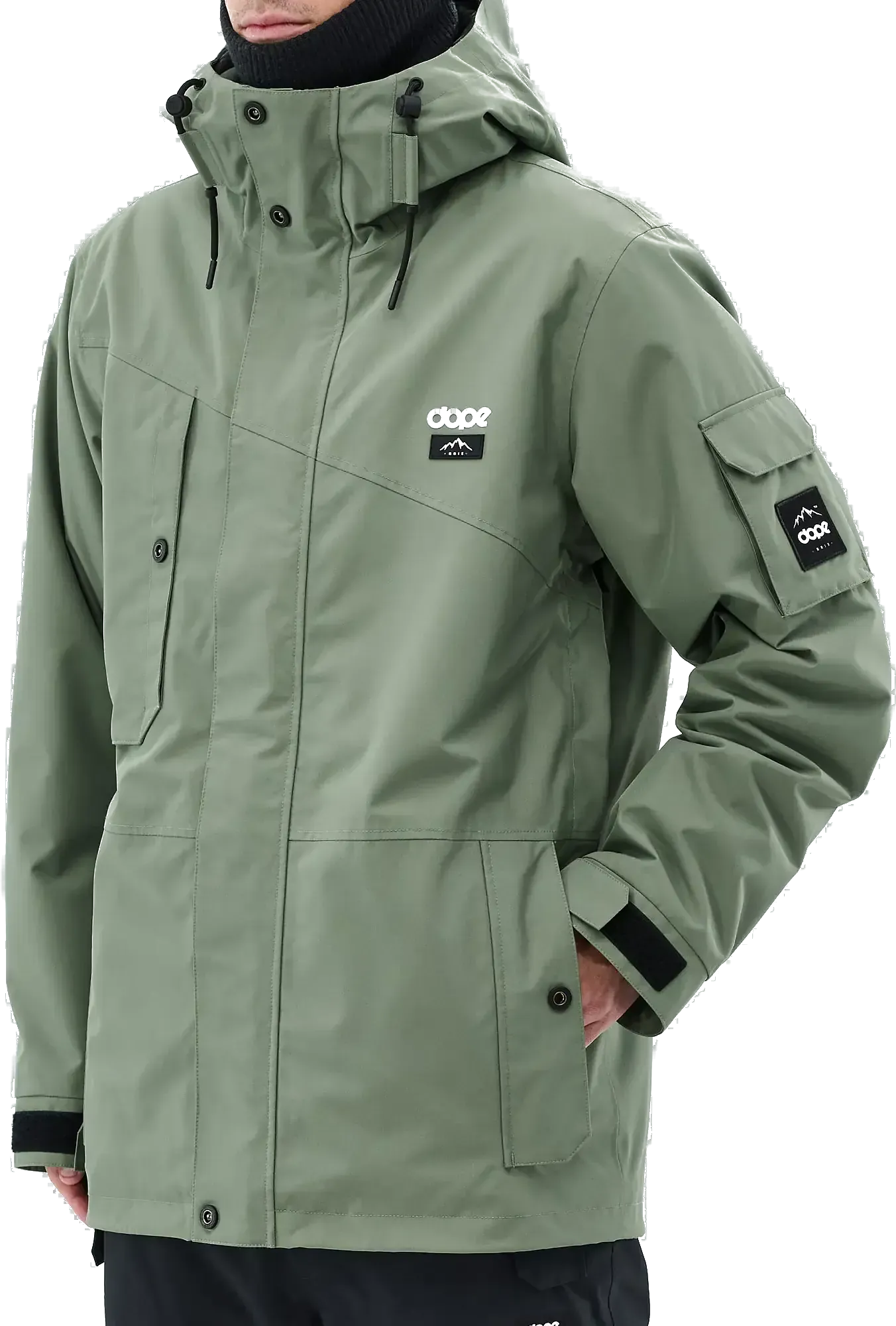
Product page → The Adept is Dope Snow's classic insulated ski jacket and the brand's clearest answer to the question "can you get a real-spec ski jacket with a modern cut without spending $300". The construction is 15K/15K Dry Tech with fully taped seams and a PFAS-free DWR; the face fabric is bluesign approved; the insulation is 60gsm Fellex through the body and 40gsm at the sleeves and hood, which puts it in the same warmth band as the Whirlibird's zip-in liner but in one integrated piece. The cut runs a touch longer than most jackets at this price, which matters when you sit on the lift in wet snow.
The Adept is the lowest-priced jacket on this page, and the point of including it is to recognize the category most "best of" lists skip: skiers who care about how the jacket reads off the mountain as well as on it. Color palette goes well beyond black and navy. The 4.8/5 rating across 2,400-plus reviews on the brand site is unusual at this price band. At $229 it sits at the same price as the Columbia Whirlibird without committing the reader to the 3-in-1 liner system, and at a higher waterproof rating.
Pros: 15K/15K with PFAS-free DWR, bluesign approved face fabric, fully taped seams, insulated 60/40gsm Fellex, contemporary cut, color palette beyond black and navy.
Cons: 15K is the resort middle, not the PNW ceiling. For genuine rain-on-snow days, the Sogn Shell 2.0 at 20K is the move. No RECCO. The insulation locks the jacket to one temperature window the way any insulated piece does.
Who it's for: first-jacket buyers, skiers who care about how the jacket looks, anyone shopping under $250 who wants the spec essentials done right. Who should skip it: PNW skiers in real rain (the Sogn or Sabre is the move), and skiers who want a shell to layer freely (this is an insulated piece, not a shell).
Patagonia
Men's Powder Town Jacket
Shortlisted · $349 at Patagonia · Best Overall
The default recommendation for a mid-level resort skier in the Northeast or Rockies.
Colors - Cascade Green
- Dried Vanilla
- Black
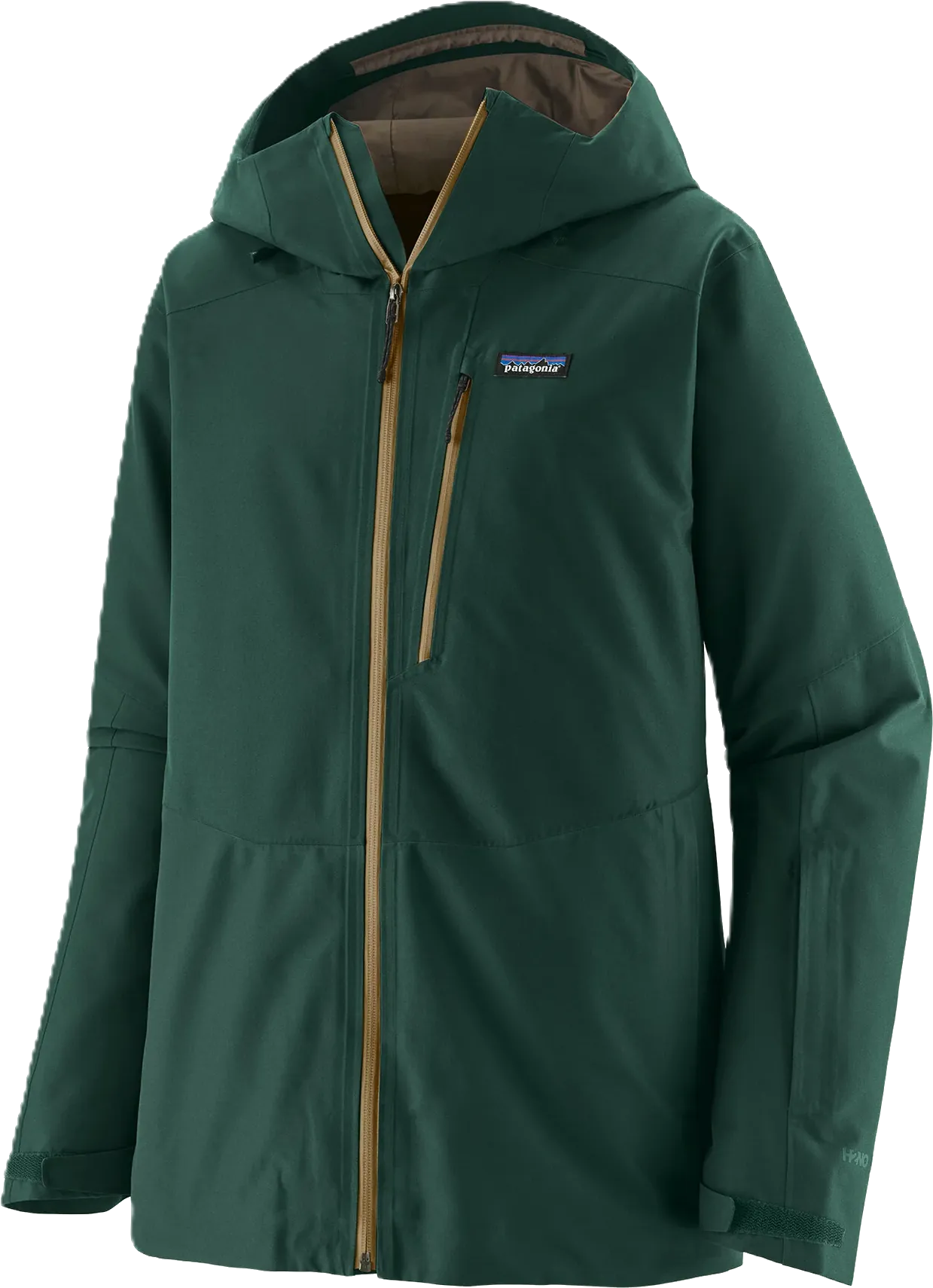
Product page → The Powder Town is the default mid-tier resort shell for skiers in the Northeast or Rockies doing 10 to 25 days a year. The 2-layer H2No shell is rated for the kind of weather Stowe and Sugarbush actually hand a skier (wet snow at noon, ice in the trees, real cold on the gondola). The 2025-26 update bumped the face fabric to 150-denier, which reads as a response to warranty claims from people skiing tree wells in Vermont.
Pit zips are the right size. The hood fits over a Smith Mission MIPS without pulling on the goggle strap. Powder skirt clips to Patagonia's matching pant if you go all in. The shell is uninsulated by design, which lets it run over a Nano Puff in January and over a fleece in March.
Pros: sensible price, real waterproofing, no PFAS, helmet-friendly hood, cuts at hip length so it does not bunch on lift loading.
Cons: 2-layer construction is not as durable as 3-layer over a 10-year horizon. No RECCO if that matters to you. Color range is on the conservative side.
Who it's for: mid-level resort skiers in the Northeast, Rockies, or Sierra doing 10 to 25 days a year. Who should skip it: backcountry tourers (the Skytour is your jacket), and people who want one box that includes insulation (look at the Whirlibird or the Alpha).
REI Co-op
First Chair GTX Jacket
Shortlisted · $319 at REI · Best Value
Real GORE-TEX under $325. The price-to-spec ratio nothing else on this list touches.
Colors - Black
- Black/Cherrywood
- REI Blue
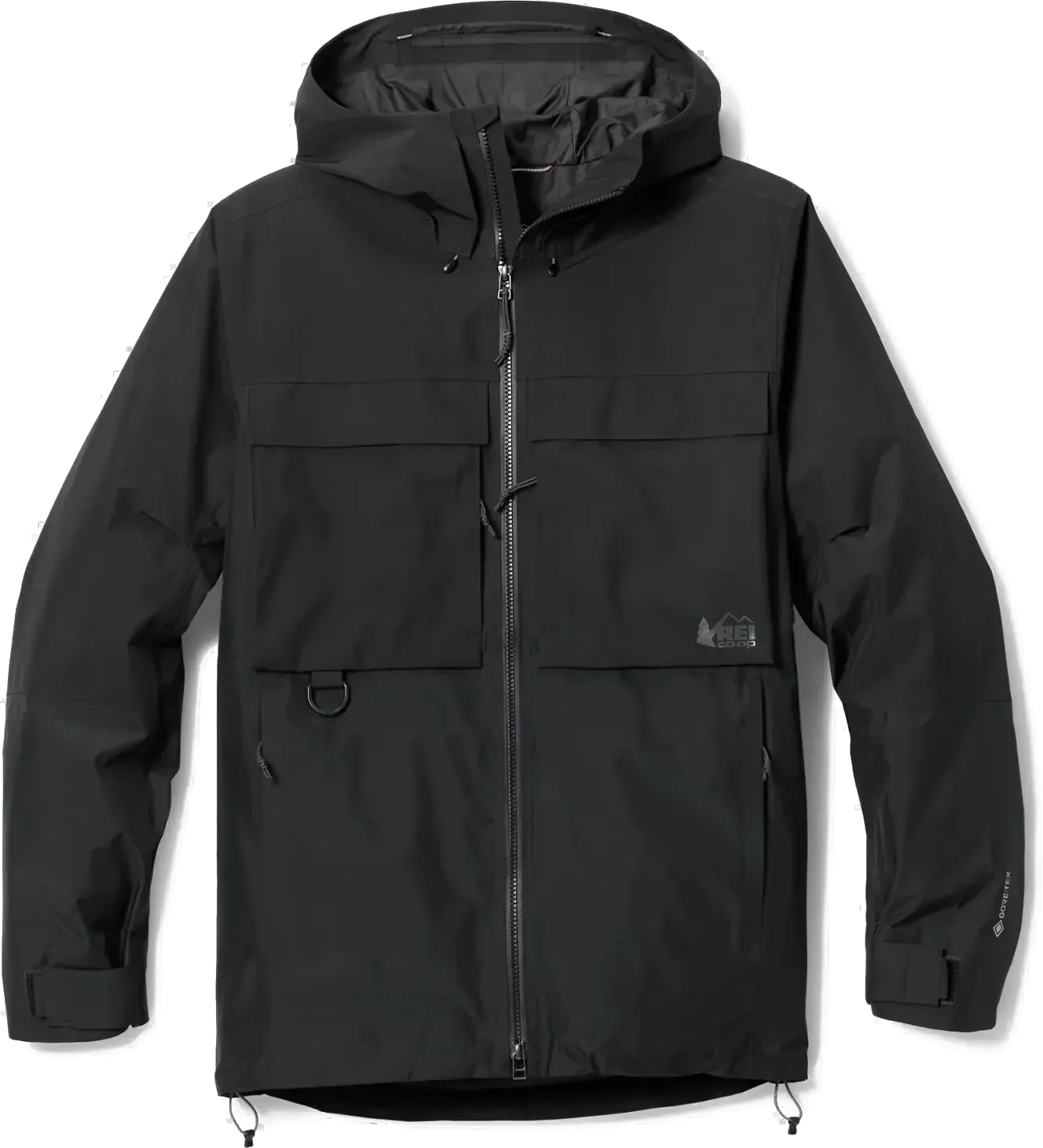
Product page → REI's house brand has gotten genuinely good in the last five years. The First Chair is a 2-layer GORE-TEX shell at a price that competing brands sell their proprietary membrane jackets for. That math is hard to argue with. OutdoorGearLab and Switchback Travel both score it well, which is the kind of third-party agreement that carries weight when a piece isn't personally tested.
The fit runs a touch boxy. The pockets are fewer than the Quantum Pro and the hood is less articulated than the Powder Town. None of that matters if your real question is "can I get a competent waterproof jacket without spending $400". Yes. This is it.
Pros: GORE-TEX at $319, helmet-compatible hood, powder skirt, REI return policy.
Cons: styling is conservative to the point of forgettable. 2-layer not 3. Sizing chart skews wider than slim.
Who it's for: first jacket buyers, people upgrading from a non-ski shell, anyone who wants GORE-TEX without the badge tax. Who should skip it: skiers who want a 10-year jacket (go 3-layer), and people who care about a slim cut.
Columbia
Whirlibird V Interchange Jacket
Shortlisted · $230 at Columbia · Best for First-Timers
3-in-1 system. The shell, the liner, or both. Two jackets for the price of one entry-level shell.
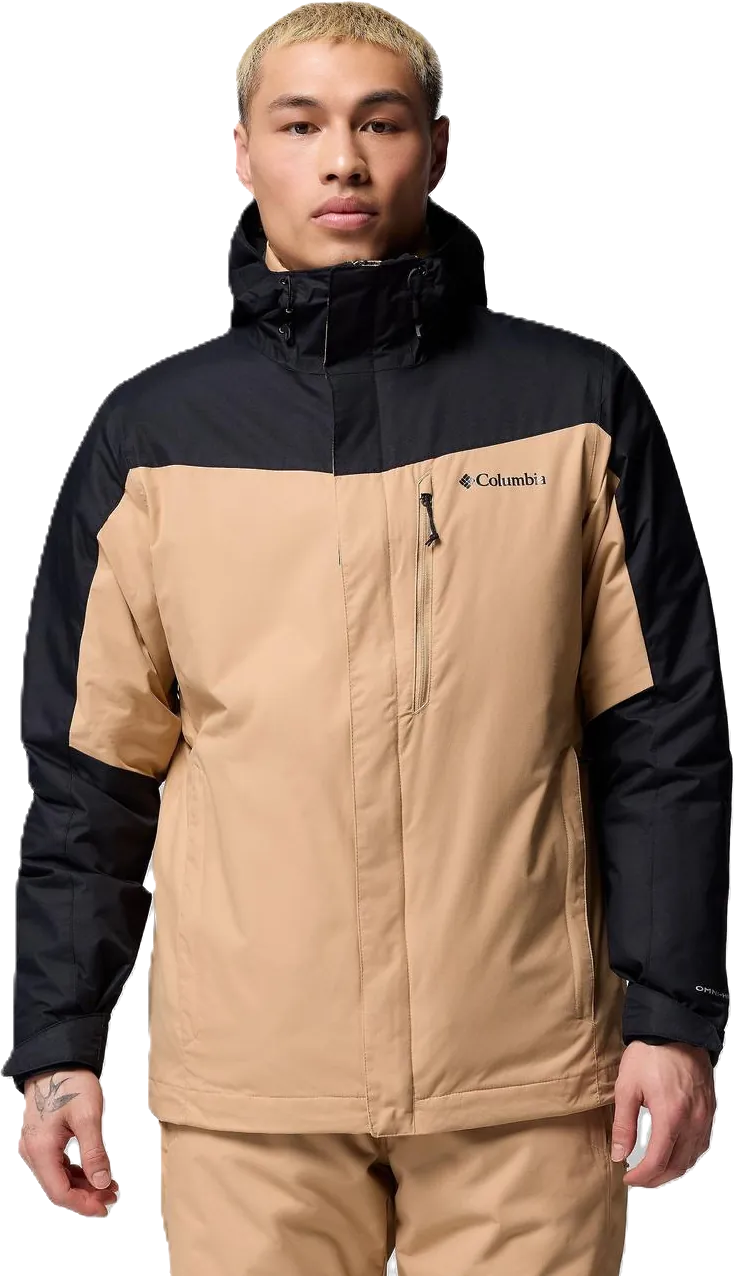
Product page → Three-in-one jackets are usually a compromise on both halves. The Whirlibird is the closest thing to an exception at this price. The shell is Omni-Tech 3-layer (decent for dry-cold and most Northeast days), the liner is Omni-Heat with Thermarator synthetic fill, and the two zip together when you need it or split when you don't.
This is not the jacket for a Mt. Baker trip. It is the right call for a partner or a kid going on a first Killington trip. The interchange system means you get a winter jacket for town when ski season ends. That math beats a single-purpose entry shell.
Pros: two jackets for the price of one entry shell. Genuinely warm with the liner zipped in. Forgiving fit for a learning skier.
Cons: Omni-Tech is not GORE-TEX, and you will notice in real rain. Liner is bulky if you are skiing hard. Shell looks plain when worn alone.
Who it's for: first-timers, infrequent skiers, gift purchases. Who should skip it: anyone skiing more than 15 days a year (you'll outgrow it in two seasons).
Helly Hansen
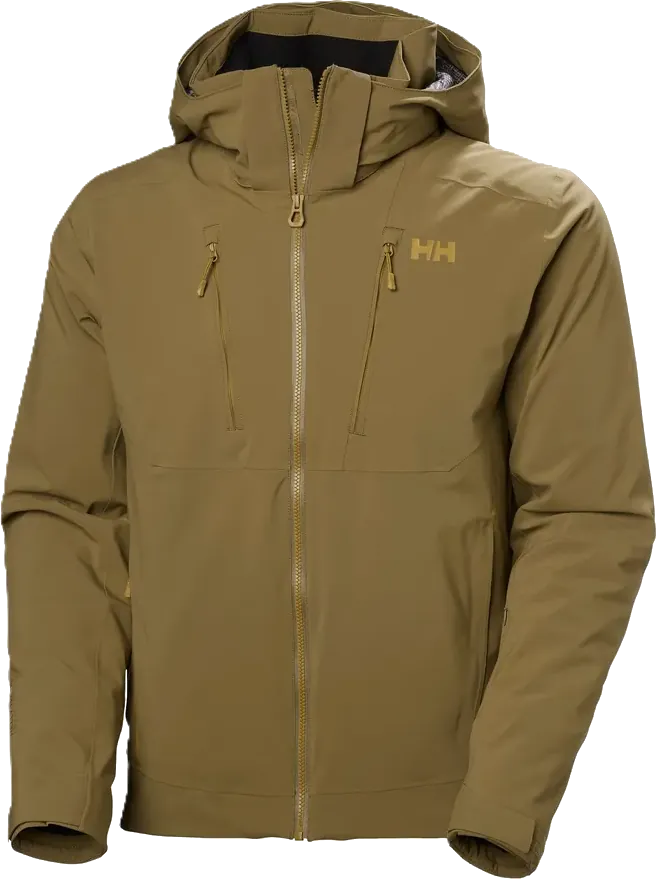
Alpha 3.0 Jacket
Shortlisted · $485 at Helly Hansen · Best for Cold Climates
PrimaLoft Black Eco mapped to where you need it. The cold-day reference jacket.
Colors - Sepia
- Green
- Blue
- Burgundy
- Grey
- White
- Red
- Black
- Navy
Product page → The Alpha is the right pick when the real problem is not waterproofing, it is cold. Body-mapped PrimaLoft Black Eco insulation puts the warmth where heat leaves the body and skips the dead zones where insulation just adds bulk. The H2Flow venting on the chest moves air without unzipping. The fabric itself is HELLY TECH Professional 2-ply 4-way stretch at 20K/20K, so the waterproofing is not a compromise either.
The hood and powder skirt are right. The Life Pocket is a marketing name for an insulated chest pocket that actually keeps your phone alive at 5°F, which is a real problem in February at Mad River Glen.
Pros: warmth that holds up at sub-15°F, real waterproofing, hood that fits over a helmet without compromise, RECCO included.
Cons: too warm for spring or for hard-charging skiers in February. Price is up there. Insulated jackets always commit you to one temperature window.
Who it's for: people who run cold, Northeast skiers who lift-ride a lot, anyone whose ski day starts at 8am at Stowe in January. Who should skip it: spring skiers, hot-runners, backcountry tourers.
Helly Hansen
Sogn Shell 2.0 Jacket
Tested · $415 at Helly Hansen · Most Versatile
Three-layer 20K shell. Wear it over a fleece in November or a heavy puffy in February.
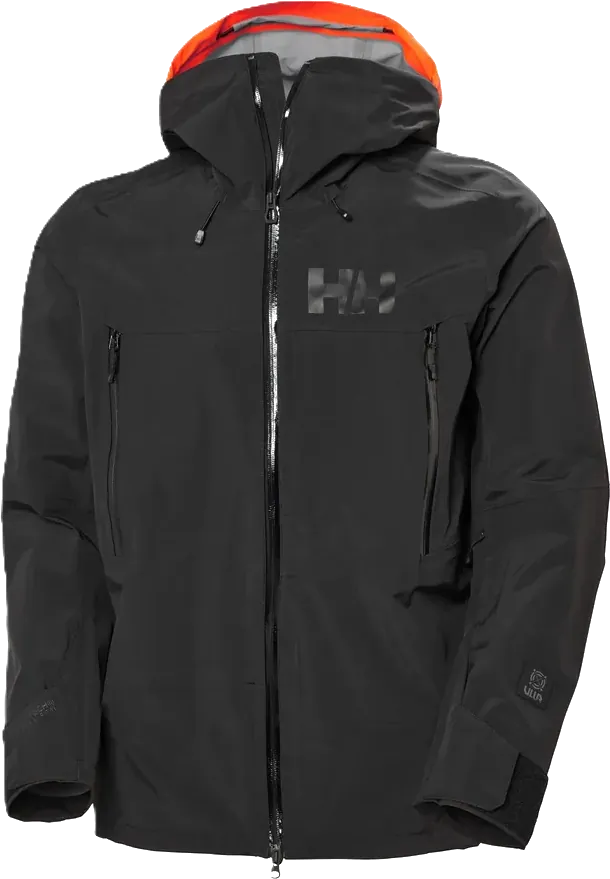
Product page → This is the one a member of the editorial team has owned and skied for three full seasons (the Tested tag applies to this entry only). Three seasons in, the DWR is starting to ask for a refresh and the cuffs are slightly fuzzed where the gloves go on. Three-layer 20K/20K HELLY TECH Professional, fully seam-sealed, RECCO, helmet-compatible hood that does not pull. The pit zips are mesh-lined so they double as drop-in pockets when open, which sounds like an afterthought and becomes the most-used feature.
It is uninsulated, which is why it earns the versatile award. Run a fleece under it on a 25°F day, run a Nano Puff under it at 5°F, run nothing under it in April. The fit has room for a mid-layer without being tent-like.
Pros: 3L construction holds up year over year. RECCO. The pit-zip-pocket detail is a small thing readers regularly note as missed once they move to anything else. PFC-free DWR.
Cons: uninsulated means a mid-layer purchase is also on the list. The neon hood lining is loud and a divisive choice.
Who it's for: resort skiers who already own a mid-layer system and want one shell that lasts. Who should skip it: first-timers (the Whirlibird is simpler), and people who only ski deep cold (the Alpha is warmer out of the box).
Flylow
Quantum Pro Jacket
Shortlisted · $430 at Flylow · Best for Spring
Fourteen-inch pit zips, nine pockets, freeride fit. The April-corn-snow specialist.
Colors - Black/Rye
- Evergreen/Gecko
- Gecko/Leaf/Evergreen
- Ocean/Abyss
- Black/Magma
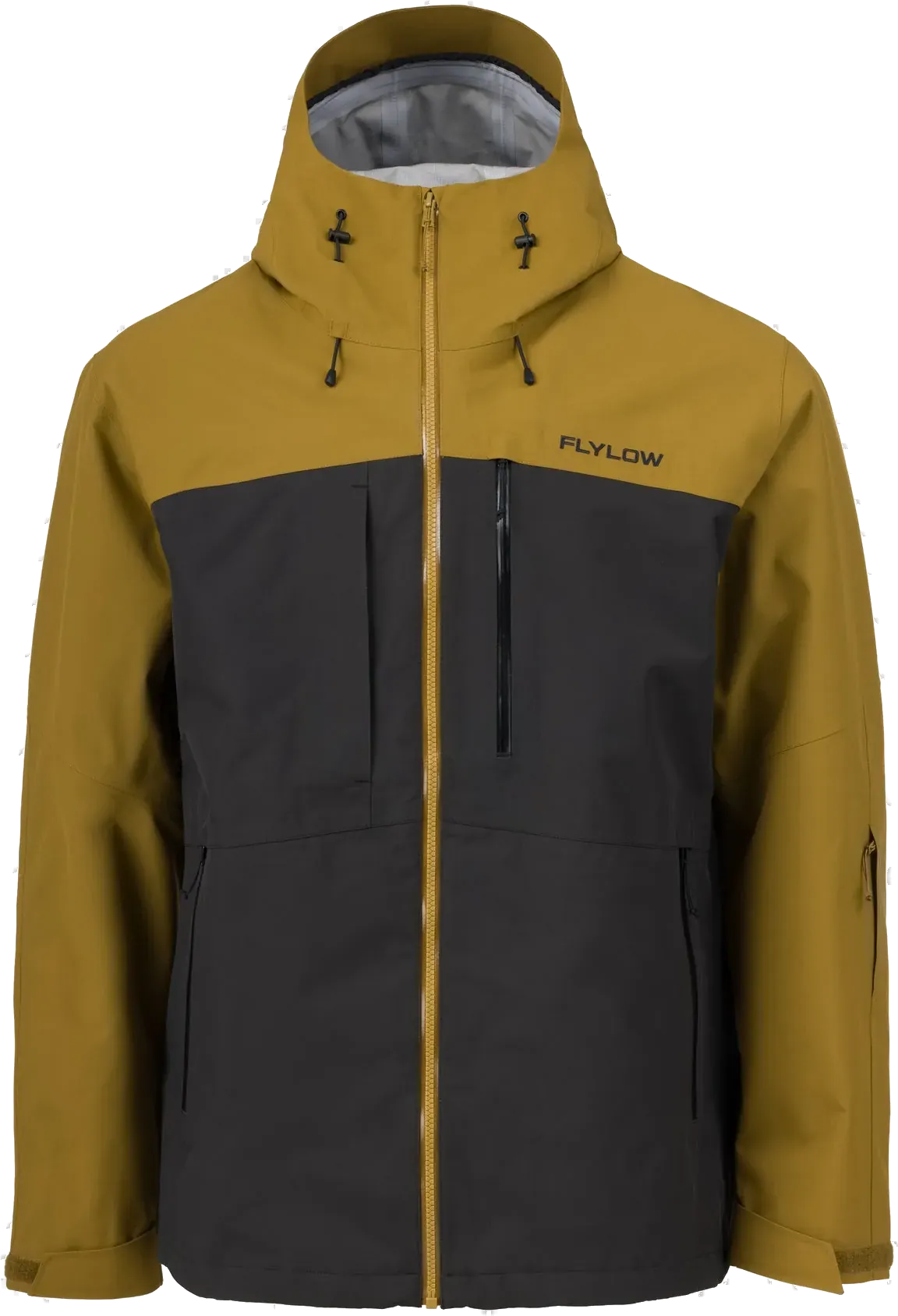
Product page → Flylow is a Colorado brand that makes shells for skiers who actually ski. The Quantum Pro is the high-end resort shell in the line: 3-layer Intuitive recycled-polyester fabric at 20K/20K, full seam taping, fourteen-inch pit zips, nine pockets, removable powder skirt, freeride fit. It weighs about 1 pound 7 ounces.
It earns the spring pick because the pit zips are the longest of anything in the comparison and the freeride fit moves air better than the Sogn or the Powder Town. April corn-snow days at Killington run 40°F by 1pm and dump-heat-fast is the priority. This jacket does that. It also handles January if there is a real mid-layer underneath.
Pros: serious pit zips, nine pockets, freeride fit that vents, recycled-polyester face fabric.
Cons: nine pockets is overkill for some people. Freeride fit is not slim. Flylow's color palette can be loud.
Who it's for: spring skiers, hard-chargers, anyone who runs hot on a bell-to-bell day. Who should skip it: skiers who want a slim cut, and people who don't need that many pockets.
Arc'teryx
Sabre Jacket
Shortlisted · $750 at Arc’teryx · Best Premium
The premium reference. PFAS-free 3L GORE-TEX ePE construction.
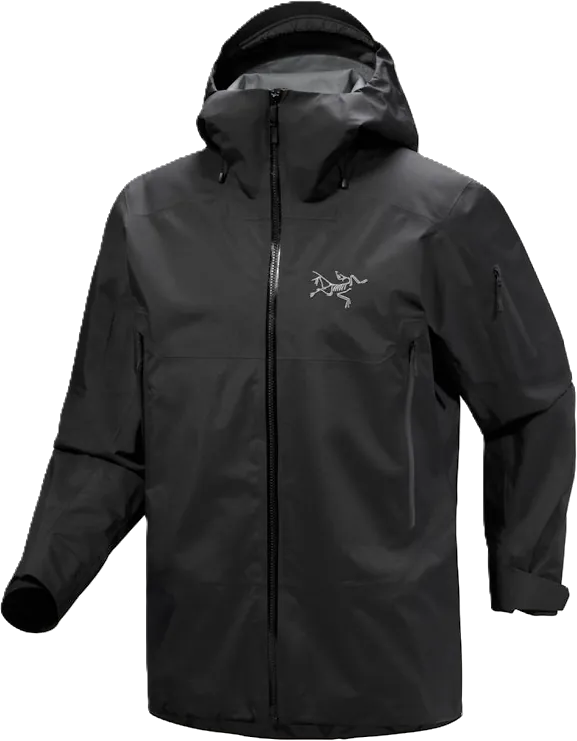
Product page → The Sabre is the reference jacket against which the rest of this list is measured. 80-denier 3-layer GORE-TEX ePE (the new PFAS-free membrane), C-KNIT backer, StormHood that adjusts to actually fit a helmet, RECCO, and the pocket layout you would design if you spent a year skiing and another year listening to ski patrollers complain about pocket layouts.
The Sabre does not carry one of the value-band awards because those go to picks that make sense at typical buyer price points. The Sabre is the splurge. If $750 is a sensible budget for a jacket and the use case justifies it, this is the buy. The 3-layer construction is the durability spec on this page. If $750 isn't on the table, the Sogn Shell 2.0 gets you 80% of the way there for $415.
Pros: 3L GORE-TEX ePE, PFAS-free, hood and pocket execution that nobody else matches, 3L construction is the durability spec on this page.
Cons: $750. The cut is athletic; layering a heavy puffy under it is tight. Branding is conspicuous.
Who it's for: skiers doing 30+ days a year who think in price-per-day. Who should skip it: almost everyone else.